
How Commercial Cleaners Are Adapting to Net Zero Goals
The UK’s commitment to achieving net-zero carbon emissions by 2050 is reshaping industries across the nation, none more so than commercial cleaning. This shift is driven not only by government regulation but by evolving consumer expectations and business responsibility. A survey by Astute Analytica found that 60% of UK
The UK’s commitment to achieving net-zero carbon emissions by 2050 is reshaping industries across the nation, none more so than commercial cleaning. This shift is driven not only by government regulation but by evolving consumer expectations and business responsibility. A survey by Astute Analytica found that 60% of UK consumers are willing to pay more for environmentally friendly cleaning products. Moreover, 73% of UK organisations now prioritise net zero, and 48% aim to achieve it within the next decade, according to the UK Net Zero Business Census.
As carbon awareness grows, the commercial cleaning sector is uniquely positioned to influence positive environmental change. Let’s explore what net zero really means, how this industry contributes to emissions, and what can be done to move toward a greener future.
What Is Net Zero?
Net zero means balancing the amount of greenhouse gases, especially carbon dioxide (CO2), emitted into the atmosphere with those being removed. The goal is not to stop all emissions entirely, but to reduce them as much as possible and then offset the remainder via natural solutions or carbon capture technologies.
The UK government has committed to achieving net zero by 2050, which places pressure on all industries to reduce their carbon footprints. For commercial cleaners, this means reassessing how supplies are sourced, how buildings are serviced, and how staff are transported.
–
How the Commercial Cleaning Industry Can Lower Emissions
The cleaning industry contributes to carbon emissions through:
- Use of harsh chemical products.
- Energy-intensive cleaning machinery.
- Petrol and diesel-powered service vehicles.
- Single-use plastics and landfill waste.
To address this, many forward-thinking companies are now adopting sustainable cleaning practices, such as:
-
Switching to Eco-Friendly Products
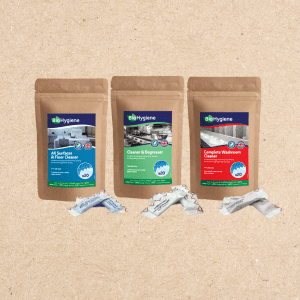
Traditional cleaning chemicals are not only harsh on the environment but also contribute to indoor air pollution. Fortunately, many alternatives now exist. At IGCHS, we offer a variety of biodegradable and non-toxic solutions, such as Biodegradable Cleaning Sachets.
These products reduce chemical waste and lower overall carbon output during manufacturing and disposal.
-
Investing in Low-Energy Equipment
Modern cleaning tools are designed to be more energy-efficient. Using scrubber dryers or vacuums with lower wattage reduces electricity consumption without compromising performance.
-
Transitioning to Electric or Hybrid Vehicles
Vehicle emissions are a major contributor to a company’s overall carbon footprint. Companies that switch to electric vans or hybrid vehicles can make significant reductions. Route planning and vehicle sharing also cut down fuel use.
-
Reducing Waste and Plastics
Single-use plastic bottles, gloves, and packaging add to the problem. Cleaning businesses are moving toward refill stations and reusable materials, contributing to the circular economy.
What are we Doing to Reach Net Zero
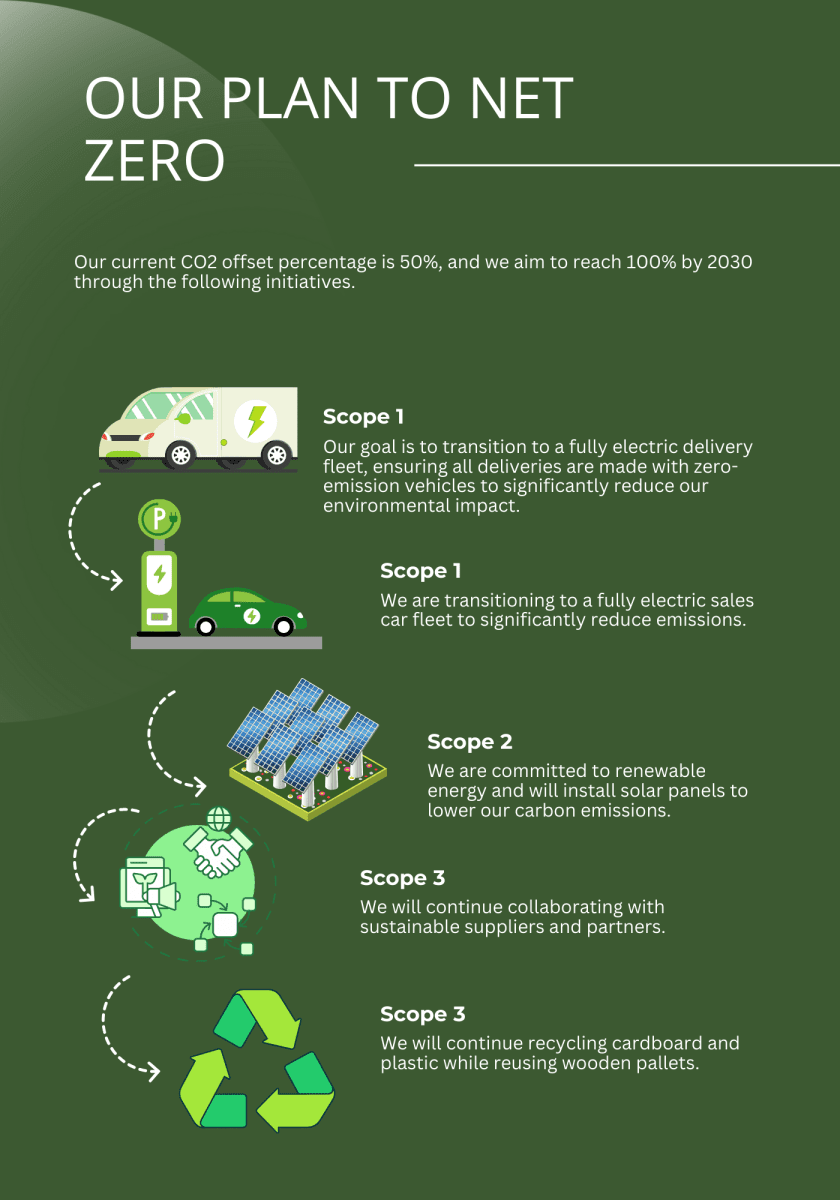
We are proud to be part of the solution. We have set an ambitious goal of being carbon neutral by 2030. Our strategy includes:
- Regular CO₂ Monitoring – Identifying our main emission sources.
- Eco Product Promotion – Recommending low-carbon products to our customers.
- Fleet Improvements – Gradually replacing fuel-powered vehicles with electric alternatives.
- Energy Efficiency – Investing in low-energy lighting and machinery.
- Staff Training – Encouraging eco-conscious practices across all departments.
We understand that meaningful change requires ongoing effort. That’s why we’re constantly updating our processes to align with our environmental commitments. You can learn more about our plan and progress on our CO₂ & Emissions page.
Our Latest News
View newsHow to Choose the Right Commercial Cleaning Chemicals for Your Business
Choosing the right cleaning chemicals for your business is about more than just picking products off the shelf. It also
View articleSpring Cleaning for Businesses Why Spring Is the Best Time for a Commercial Deep Clean
Spring is more than just a change of season. It is the perfect time for spring cleaning in commercial spaces,
View articleHow to Clean Care Homes Effectively: A Practical Guide for Managers and Staff
Maintaining a clean and hygienic care home is essential for resident safety, comfort and wellbeing. In a residential setting, cleaning
View article